
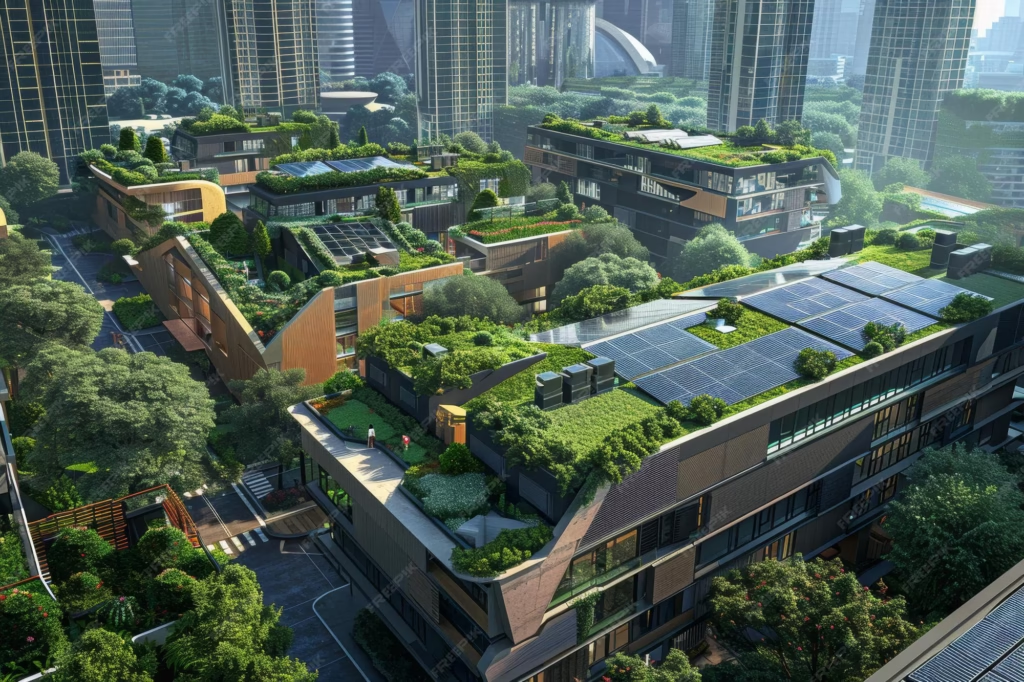
Urban expansion is one of the most defining forces shaping real estate markets in Africa today. Cities are no longer confined to their historical cores. They are spreading outward, absorbing surrounding towns, villages, and undeveloped land into broader metropolitan systems. This expansion is not random. It follows economic logic, infrastructure deployment, and population movement. For investors and developers, urban expansion creates new property frontiers where long term value is formed.
In Africa, urban growth is driven by a combination of population increase and economic concentration. As cities attract employment, education, and services, they draw people from rural and semi urban areas. This migration increases demand for housing beyond city centers. Inner city land becomes scarce and expensive, pushing development outward. Peri urban zones emerge as transition spaces where agricultural land gradually gives way to residential and commercial use.
Read Next: Why Documentation and Transparency are Non-Negotiable in Property Investment
These transition zones represent new frontiers of opportunity. They are often characterized by lower entry prices, larger land parcels, and proximity to planned infrastructure. While they may lack full services initially, their strategic value lies in future integration into the urban fabric. Investors who understand this integration process are better positioned to identify locations with long horizon appreciation potential.
Infrastructure is the primary catalyst of urban expansion. Roads, bridges, rail lines, and utilities extend the reach of cities. When infrastructure connects peripheral areas to employment centers, those areas become viable for residential development. Accessibility transforms land from distant to desirable. This transformation is visible in many African cities where new highways and transport corridors have opened up previously overlooked regions.
Urban expansion also follows economic nodes. Industrial zones, logistics hubs, universities, and commercial districts create gravitational pull. Housing demand clusters around these nodes as workers seek proximity. Over time, these clusters merge with existing urban areas, forming new neighborhoods and districts. Property values in these areas rise as demand stabilizes and infrastructure improves.
From my experience engaging with land and estate development projects, one consistent pattern is that early entrants into expansion corridors benefit from compounded appreciation. This appreciation unfolds in stages. Initial gains come from anticipation. Subsequent gains follow infrastructure delivery. Long term gains emerge as communities form and services mature. Understanding these stages helps investors manage expectations and align strategies with reality.
Urban expansion also reshapes social dynamics. New communities form at the edge of cities, blending rural and urban lifestyles. These communities often attract young families, professionals, and entrepreneurs seeking affordability and space. Their preferences influence housing design, amenity demand, and governance models. Developers who listen to these preferences create estates that align with emerging lifestyles rather than replicating outdated urban forms.
At BlueDutch, development frameworks emphasize identifying expansion corridors where infrastructure, planning, and demographic trends intersect. Estate planning approaches focus on long term integration rather than short term demand spikes. This expertise driven approach reflects an understanding that successful developments grow with cities rather than ahead of them.
Policy decisions further shape expansion patterns. Zoning regulations, land use plans, and development incentives guide where growth occurs. Governments may designate growth poles or satellite towns to manage congestion and distribute economic activity. Investors who track policy direction gain insight into future frontiers. Policy alignment reduces risk and enhances appreciation potential.
Urban expansion also introduces challenges that influence value. Environmental risk, inadequate drainage, and informal development can undermine growth corridors if not managed. Sustainable expansion requires planning that balances density, infrastructure, and environmental protection. Estates that anticipate these challenges maintain value and livability as urban pressure increases.
Transportation innovation may further accelerate expansion. Improved public transit, ride sharing, and logistics networks reduce the friction of distance. As commuting becomes more efficient, the radius of viable residential development expands. This dynamic increases the range of property frontiers available to investors.
Urban expansion is not uniform. Some corridors mature faster than others. Factors such as governance quality, infrastructure funding, and economic diversification influence pace. Investors who evaluate these factors avoid overexposure to stagnant zones. Diversifying across multiple expansion corridors can also reduce risk.
In the long term, urban expansion contributes to city resilience. Distributed growth reduces pressure on city centers and creates opportunities for balanced development. Property investments aligned with this distribution benefit from sustained demand rather than speculative concentration.
In conclusion, urban expansion creates new property frontiers by extending the economic and social reach of cities. These frontiers offer opportunities for long term value creation grounded in infrastructure, demographics, and planning. Investors and developers who understand how cities grow position themselves at the leading edge of opportunity rather than chasing it after maturity.
To explore BlueDutch’s development philosophy and to follow ongoing initiatives, visit the company’s official website for updates, insights, and investor information.