
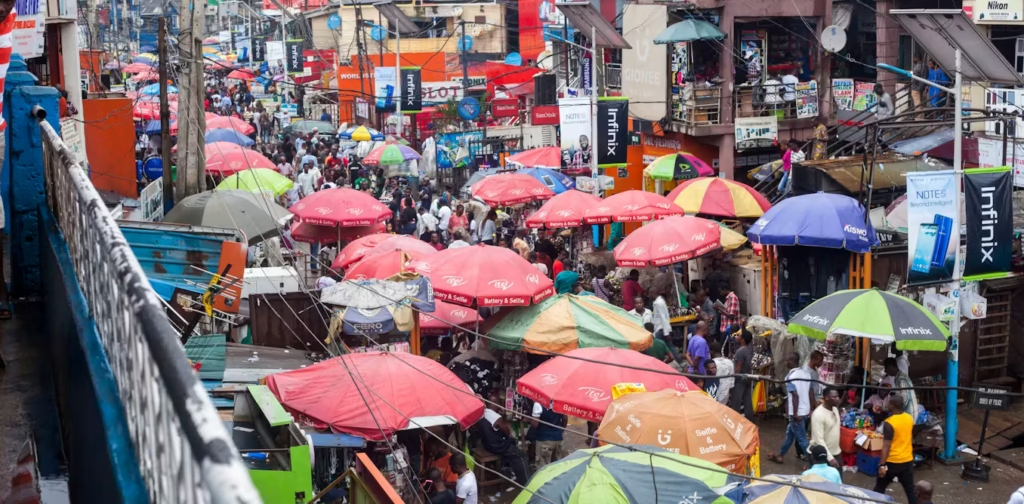
Africa is urbanizing at a pace rarely seen in modern history. Cities are expanding rapidly as populations grow and economic opportunities concentrate in urban centers. While this transformation creates opportunity, it also presents a significant challenge. Housing supply is not keeping pace with demand, and the gap is widening.
Urban migration is driven by multiple factors. Employment opportunities, education access, and improved services attract people to cities. As populations increase, housing demand rises across all income segments. Without sufficient supply, prices increase and informal settlements expand.
Next Read: Why Infrastructure Is the Missing Middle in Urban Development
From my experience observing development trends across growth corridors, the scale of demand is often underestimated. Housing is not just needed in large quantities, but in structured formats that support infrastructure and governance. Unplanned expansion creates long term challenges that are difficult to reverse.
The coming housing shortage is not solely about quantity. It is also about affordability. Many urban residents cannot access formal housing due to cost barriers. This mismatch between supply and income levels creates pressure across the market.
At BlueDutch, development philosophy emphasizes scalable models that address both supply and structure. Site and service developments, phased infrastructure delivery, and governance frameworks are designed to support expanding demand. This expertise driven approach reflects the understanding that housing must be delivered in ways that are both accessible and sustainable.
Urban expansion corridors will play a critical role in addressing the shortage. As city centers become saturated, peripheral areas must absorb growth. Structured development in these areas can provide organized alternatives to informal settlements.
Policy alignment is also essential. Governments must support land access, infrastructure development, and financing frameworks that enable large scale housing delivery.
Technology may also support solutions through improved planning and documentation systems.
In conclusion, Africa’s rapid urbanization presents both opportunity and challenge. The coming housing shortage requires coordinated action across policy, development, and financing. Those who act early and strategically will shape the future of urban living on the continent.
To explore BlueDutch’s development philosophy and to follow ongoing initiatives, visit the company’s official website for updates, insights, and investor information.
Investors, partners, and prospective collaborators may also follow ongoing estate and community development updates across BlueDutch’s media and communication platforms.