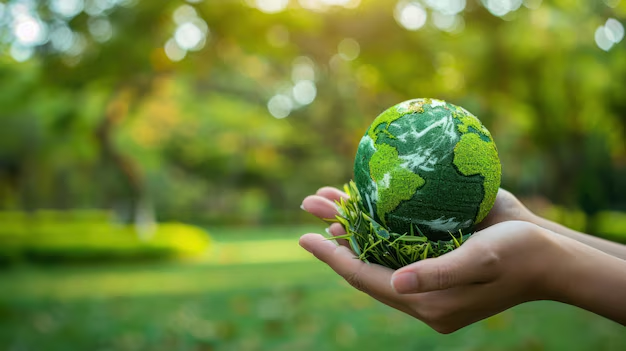
As cities expand and real estate development accelerates, one question becomes increasingly important. How do we build without compromising the environment that supports us. Development and environmental responsibility are often positioned as competing priorities, yet in reality, they are deeply connected. Sustainable development is not only an ethical consideration. It is a practical requirement for long term viability.
Real estate development interacts directly with natural systems. Land is cleared, drainage patterns are altered, and infrastructure is introduced into existing ecosystems. Without proper consideration, these changes can lead to flooding, erosion, and long-term environmental degradation. The consequences are not always immediate, but they accumulate over time.
From my experience observing development outcomes across different locations, one of the most consistent patterns is that projects that ignore environmental factors eventually face challenges. Poor drainage planning leads to water accumulation. Inadequate land assessment results in structural issues. These problems affect both residents and investors, reducing the long term value of the development.
Environmental consideration begins with site selection. Understanding the characteristics of the land, including soil composition, water flow, and topography, is essential. These factors influence how infrastructure should be designed and how buildings should be positioned. Skipping this stage introduces risk that may not be immediately visible but becomes significant over time.
At BlueDutch, development philosophy places emphasis on structured planning that incorporates environmental awareness. Drainage systems, layout design, and land preparation are approached with a long term perspective. This expertise driven approach recognizes that sustainability is not an added feature. It is an integral part of responsible development.
Water management is one of the most critical aspects of environmental planning. Urban flooding is a growing concern in many cities. Effective drainage systems, proper grading, and water flow management help mitigate this risk. These systems must be designed to handle both current conditions and future climate variability.
Green spaces also play an important role. Beyond aesthetics, they contribute to temperature regulation, air quality, and overall environmental balance. Integrating green areas into estate planning enhances both environmental sustainability and quality of life.
Material selection and construction practices further influence environmental impact. Efficient use of resources, reduction of waste, and consideration of energy consumption all contribute to more sustainable outcomes. While these practices may require additional planning, they often result in long term benefits.
Regulatory frameworks are increasingly reflecting the importance of environmental responsibility. Compliance with environmental guidelines is becoming more consistent, and enforcement is gradually improving. Developers who align with these standards are better positioned to navigate evolving regulatory environments.
There is also a growing awareness among buyers and investors. Environmental considerations are no longer secondary concerns. They influence decision making. Buyers are beginning to recognize that sustainable environments offer greater long term value and stability.
Responsible development also requires forward thinking. Climate patterns are changing, and urban environments must adapt. Planning for resilience ensures that developments remain functional under varying conditions. This includes considering water management, infrastructure durability, and overall adaptability.
Importantly, environmental responsibility is not about limiting development. It is about enhancing it. When environmental factors are integrated into planning, developments become more resilient, more efficient, and more valuable over time.
In conclusion, responsible real estate development requires a deliberate focus on environmental considerations. It ensures that projects are sustainable, resilient, and aligned with long term needs. As urban expansion continues, integrating environmental awareness into development will be essential for creating spaces that endure.
To explore BlueDutch’s development philosophy and to follow ongoing initiatives, visit the company’s official website for updates, insights, and investor information.
Investors, partners, and prospective collaborators may also follow ongoing estate and community development updates across BlueDutch’s media and communication platforms.